

Moscow, 12/03/2025 — Freedom Person
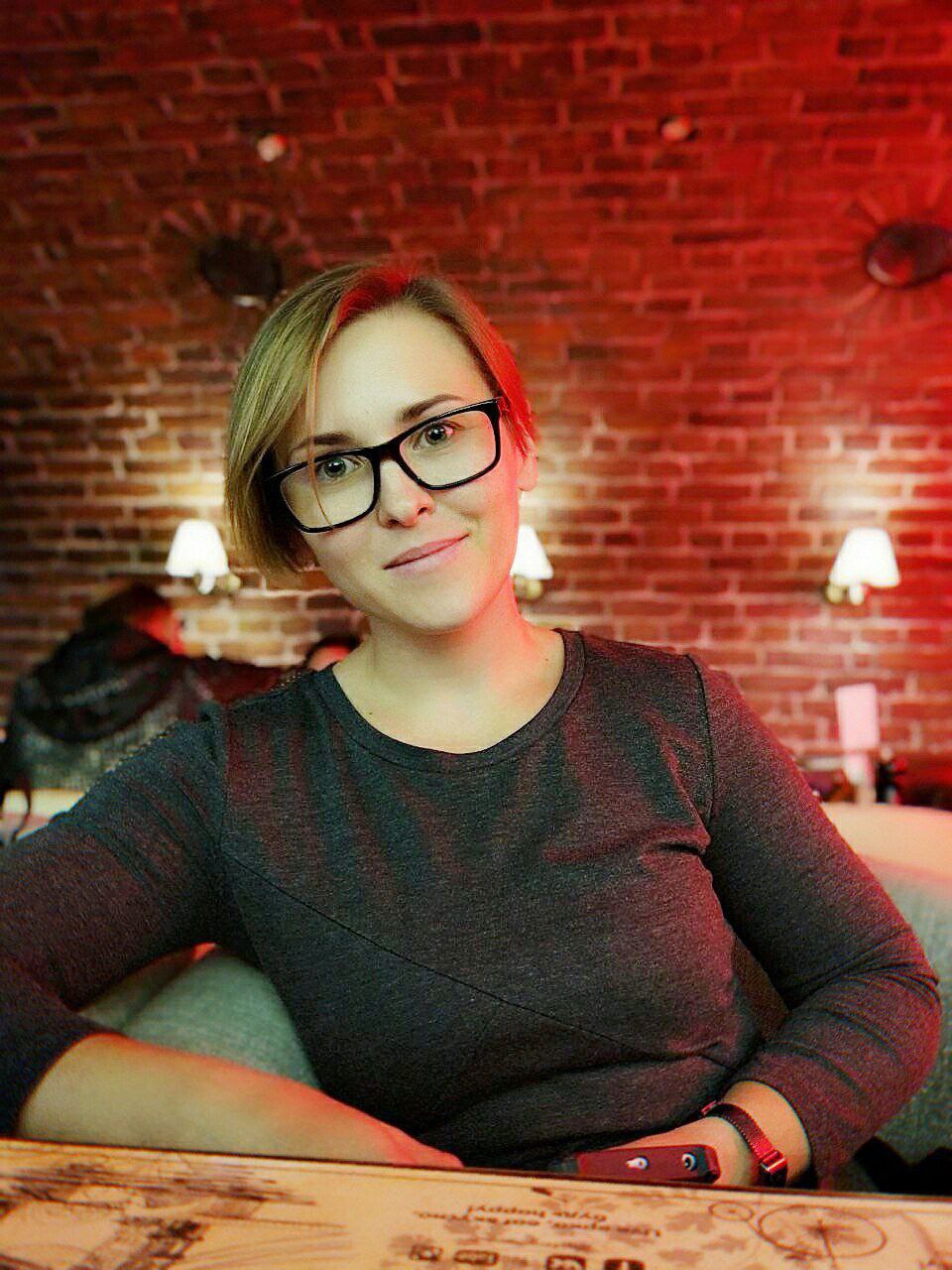
Yulia Lemeshchenko is a Ukrainian Master of Sport and national champion in classic powerlifting.
She was born in Stary Oskol and later lived in Voronezh, from where she moved to Kharkiv in 2014 together with her husband and son. As Lemeshchenko later explained, she began training only at the age of 33—after her husband said something she perceived as deeply insulting. That moment became the turning point that pushed her into sports.
Within just one year of training, Lemeshchenko achieved the qualification standard for Master of Sport of Ukraine. She actively competed and worked as a coach.
Among her key achievements:
2021 — Champion of Ukraine in classic powerlifting.
She took first place in the weight class up to 57 kg, winning all three events.
According to Lemeshchenko herself, sports became a way to change her life, regain confidence and independence, and find purpose after her divorce.
Charges and Sentencing
In January 2025, Yulia Lemeshchenko was taken into custody in Voronezh. Her case was heard by the Second Western District Military Court in Moscow. On November 15, 2025, the court issued a sentence: 19 years of imprisonment based on multiple charges—treason, participation in a terrorist organization, attempted terrorist attack, sabotage, and unlawful manufacture of explosive materials. In addition to the prison term, the court imposed a fine of 1 million rubles. The prosecutor sought an even harsher sentence—23 years of incarceration.
According to the case file, the story that led to Lemeshchenko’s indictment began in 2014, when she moved with her family from Voronezh to Kharkiv. After Russia’s full-scale invasion of Ukraine in 2022, Lemeshchenko left for Germany, but in 2023 she returned to Ukraine and attempted to join the “Freedom of Russia Legion.” The process never moved beyond an initial interview, but according to her own account, she continued looking for ways to participate in resistance efforts.
In the spring of 2024, an explosive device detonated near Lemeshchenko’s residence in Kharkiv; the blast shattered the windows of her apartment. While her home was being repaired, she relocated to Kyiv. There she completed a training program—firearms instruction, drone operation, and explosive manufacturing. According to her, the instructors did not disclose their affiliation with any specific units, and she was promised Ukrainian citizenship if she participated in operations.
Return to Russia and Execution of Assignments
In August 2024, Lemeshchenko left Ukraine through Odesa, Chișinău, and Tbilisi and arrived in Voronezh, where she had previously lived. From there, she contacted her handlers and, according to investigators, received financial support—approximately $1,500 and 300,000–350,000 rubles. With these funds she purchased components and manufactured roughly 10 kilograms of explosive material.
One of the key counts in the indictment concerns the explosion of a power transmission line support structure near Saint Petersburg in October 2024. Lemeshchenko installed an improvised explosive device on the power line, resulting in structural damage. For completing the task, investigators say she received an additional payment of 300,000 rubles.
Later that fall, she was instructed to monitor Colonel Aleksey Loboda, the commander of an airbase who, according to Ukrainian prosecutors, was linked to airstrikes on Kharkiv. Lemeshchenko tracked his movements and observed his residence. At the same time, she manufactured two more explosive devices, later stating that they were intended “for transfer to other individuals.”
She was detained in January 2025. Court records showed that surveillance on her had begun earlier—at least since December, following her trip to Egypt, where she met with representatives of Ukrainian intelligence services.
Lemeshchenko’s Testimony and Her Position
During the investigation and in court, Lemeshchenko did not deny the actions attributed to her but emphasized that she did not consider herself morally guilty. According to her, everything she did was a response to the destruction that the war had brought to her city—Kharkiv. She stated that she never intended to harm civilians and that her objective was solely to counter those who carried out strikes on her home.
In her final statement to the court, Lemeshchenko stressed that she considers Kharkiv her true home and that her actions were driven by the desire to protect the people living there—her friends, relatives, and neighbors. She acknowledged that she chose a dangerous and radical path but said she saw no other way to resist.
A Hero of Our Time or a Traitor?
The story of Yulia Lemeshchenko inevitably splits into two opposing interpretations, each shaped not only by facts but by the perspective from which those facts are viewed.
From the standpoint of Russian criminal law, Lemeshchenko is a criminal and a traitor to the state. Her actions were legally classified as sabotage, attempted terrorist attack, and providing material support to a foreign armed organization. Within the framework of the Russian Criminal Code, her conduct falls under some of the most severe federal offenses. This is why she received nearly the maximum possible sentence—19 years.
From the Ukrainian perspective, Lemeshchenko may be viewed as a participant in resistance efforts—a person acting in defense of Ukraine.
In practical terms, she sought to weaken the Russian military because she personally believed its actions were unjust and dangerous to the people she cared about.
This makes her a person who placed her convictions above her citizenship.
Vitali Ivaneko
