
WASHINGTON, Dec 12, 2025 (Freedom Person)
On December 11, 2025, President Donald Trump signed the executive order titled “Ensuring a National Policy Framework for Artificial Intelligence”, aimed at blocking states from crafting their own regulations for artificial intelligence (AI). According to the White House, the rapidly growing AI industry risks being stifled by a patchwork of onerous state rules, especially amid a global race with China for technological supremacy.
Summary of the Executive Order
The executive order seeks to centralize AI regulation at the federal level. It directs federal agencies to review and potentially challenge state laws that could create barriers for AI development and implementation. The order also threatens to limit federal funding for states that maintain burdensome regulations.
The primary goal is to establish a unified national approach to AI governance, ensuring that U.S. companies can innovate and compete globally without being hindered by conflicting state-level rules.
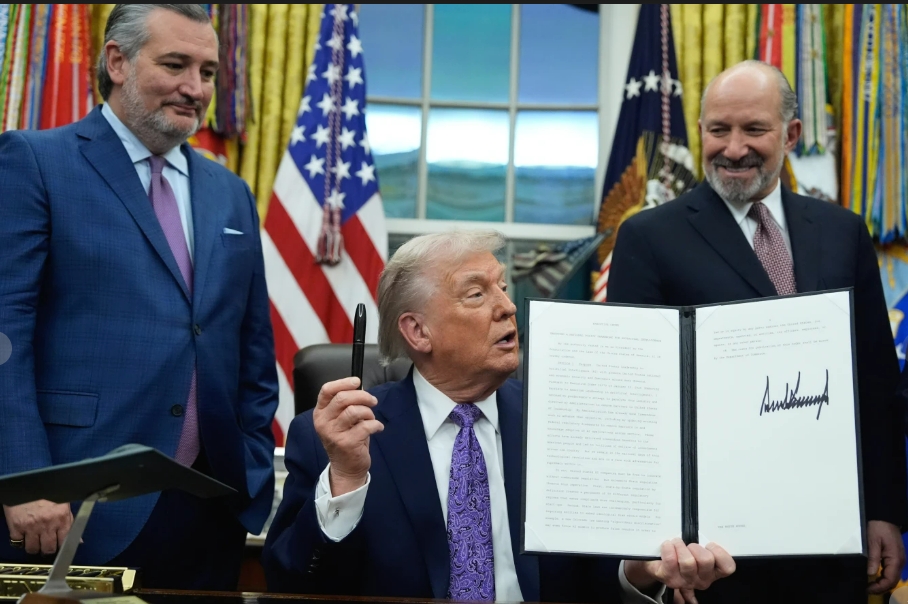
The White House has framed the executive order as a necessary step to protect and accelerate U.S. leadership in artificial intelligence. According to President Trump, “there’s only going to be one winner” in the global AI race, referring to the competition with China, where companies receive a single point of approval from the central government. The administration argues that allowing each state to set its own rules would create a patchwork of regulations that could stifle investment and innovation.
David Sacks, a venture capitalist advising the administration on AI and cryptocurrency policy, emphasized that the federal government intends to challenge only the most burdensome state regulations while supporting measures aimed at child safety and other critical protections.
In its public statements, the White House has underscored the following points:
- Federal coordination is essential to prevent conflicting rules across 50 states.
- Streamlined regulation will allow U.S. companies to remain competitive internationally.
- Targeted intervention will focus on laws deemed excessively restrictive rather than on basic safety or ethical standards.
Through this approach, the administration seeks to centralize authority over AI regulation at the federal level, framing it as a balance between innovation, economic growth, and strategic advantage in the global technology race.
State-Level AI Regulations
Several U.S. states have already begun implementing their own rules to govern artificial intelligence, responding to the technology’s growing impact on everyday life. According to the International Association of Privacy Professionals, California, Colorado, Utah, and Texas have passed laws that impose certain requirements on private companies using AI.
Key elements of these state regulations include:
- Limiting the collection of sensitive personal data and protecting privacy.
- Requiring transparency from companies about how AI systems make decisions.
- Assessing potential risks of discrimination, including biases related to gender, race, or socioeconomic status.
These measures are a reaction to the increasing role of AI in critical areas, such as:
- Hiring and employment decisions
- Rental and housing approvals
- Credit and loan applications
- Certain healthcare determinations
State regulators argue that without local oversight, citizens may face increased risks from biased, opaque, or unsafe AI systems. These initiatives reflect a growing recognition that AI is not just a technological issue but a matter of civil rights and social fairness.
Data Protection, Accountability, and Human Rights Risks
Artificial intelligence systems rely on large volumes of personal data to function. Without clear regulatory safeguards, the collection, processing, and reuse of this data can expand with limited oversight, increasing the risk of misuse and privacy violations.
When transparency requirements are weakened, individuals may no longer know how or why AI systems make decisions that affect their employment, housing, access to credit, or medical services. This lack of visibility makes it difficult to challenge errors, bias, or unlawful outcomes.
Reduced oversight also shifts responsibility away from developers and deployers of AI systems. As regulatory constraints are loosened, corporations gain greater freedom to operate without clear accountability for the social and legal consequences of their technologies.
These dynamics directly affect human rights protections, particularly for vulnerable groups who are more likely to be subject to automated decision-making. Without enforceable standards on data protection, transparency, and fairness, AI risks reinforcing inequality rather than reducing it.
Conclusion
The executive order signed by President Trump marks a significant shift in how artificial intelligence is regulated in the United States. By blocking states from setting their own rules, the federal government aims to create a unified national approach and accelerate technological development.
At the same time, states have already taken steps to govern AI use, focusing on transparency, fairness, and accountability in areas such as employment, housing, credit, and healthcare. Without careful oversight, there is a risk that individual protections could be weakened, decision-making processes could remain opaque, and vulnerable groups could face disproportionate impacts.
The challenge remains to balance the need for innovation and global competitiveness with the protection of human rights and fairness. How this balance is achieved will shape the future of AI in everyday life and determine the level of trust citizens can place in these emerging technologies.
By Vitali Ivaneko

