

December 14, 2025 — Belarus, Freedom Person
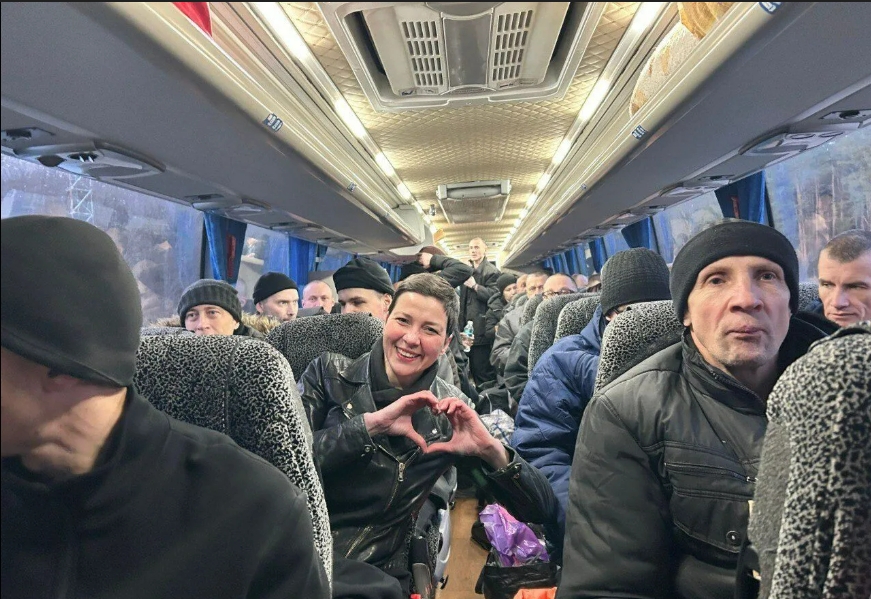
On December 13, 2025, the authorities of the Republic of Belarus announced a pardon of 123 individuals previously convicted in politically motivated cases. The release was the result of negotiations with the United States and was explicitly tied to the lifting of U.S. sanctions on a major state-owned enterprise, the potash producer Belaruskali. This represents the largest release of political prisoners since the crackdown on mass protests following the 2020 presidential election.
The pardoned list included figures long regarded by Belarusian authorities as threats to the political stability of the regime: opposition leaders, human rights defenders, independent journalists, civil society activists, and foreign nationals convicted on charges of espionage or “extremist activities.” Many had received long prison sentences following trials that did not meet internationally recognized standards of due process and fair trial.
From a human rights perspective, this event is double-edged. While it ends the unlawful detention of specific individuals, it also confirms the use of repression as a bargaining tool in foreign policy. Assessing the implications requires examining not only the fact of the release, but also who was released, why they were imprisoned, and what has happened to them since their release.
Who Was Released and the Significance of Their Imprisonment
Among the 123 released were some of the most prominent figures of Belarusian opposition and civil society, including:
-
Maria Kolesnikova, a key symbol of the 2020 protests;
-
Viktor Babariko, former presidential candidate representing an alternative political project;
-
Ales Bialiatski, human rights activist and Nobel Peace Prize laureate;
-
Marina Zolotova, former editor-in-chief of the largest independent portal in Belarus, TUT.by.
All were convicted on charges widely recognized by human rights organizations as politically motivated.
The common denominator across these cases was not the nature of the alleged offenses, but the public impact of the individuals. They posed no threat to public safety, yet represented alternative political or social legitimacy: mobilizing supporters, shaping public discourse, documenting human rights violations, and challenging the state’s monopoly over information and political representation.
Most of the pardoned individuals were not permitted to remain in Belarus. A significant portion, including key opposition figures, was immediately expelled—primarily to Ukraine and Lithuania. This practice effectively combines release with forced exile, depriving the freed individuals of the ability to exercise their civil and political rights freely within the country.
Thus, the release of these 123 people did not involve any acknowledgment of the illegality of their persecution, the annulment of their sentences, or rehabilitation. The state retained control over the political space by first imprisoning and then expelling critics. From a human rights perspective, the logic of repression was not reconsidered, but temporarily adjusted for foreign policy purposes.
Human Rights Risks and Institutionalization of Repression
Despite the humanitarian effect, the mechanism used to make this decision creates serious long-term risks for human rights protection. Tying the release of political prisoners to economic and sanction concessions effectively institutionalizes arbitrary detention as a legitimate tool of state policy.
The imprisonment and subsequent release were not the result of sentence review, recognition of judicial errors, or reforms of repressive laws. On the contrary, the state confirmed its view that the convictions were lawful and that it retains discretion over the fate of political prisoners. This indicates that the underlying causes of political repression—lack of independent judiciary, criminalization of peaceful civic activity, and expansive interpretations of “extremism”—remain unchanged.
Another risk is the creation of incentives for future arrests. When release becomes a matter of international bargaining, the number of political prisoners becomes a negotiable resource. Repression shifts from a temporary tool of protest suppression to a systemic, repeatable practice.
Of particular concern is the practice of release coupled with forced exile. While formally ending incarceration, the state simultaneously restricts the released individuals’ rights to participate in their own country’s civic and political life. This contradicts both human rights principles and the very idea of amnesty as an act of justice, rather than a substitution of one form of coercion with another.
Role of International Actors and Limits of Sanction Pressure
Linking the release of political prisoners to sanction relief raises questions about the responsibility of international actors, particularly the United States. From a human rights standpoint, sanctions were imposed in response to systemic and ongoing human rights violations—not as a temporary measure to be exchanged for partial concessions.
The lack of publicly disclosed and legally binding conditions of the agreement creates a transparency deficit. It is unclear what obligations the Belarusian side undertook, what monitoring mechanisms exist, and what will happen if repression resumes. This weakens the role of international human rights mechanisms and shifts decision-making from the legal sphere into political negotiation.
Moreover, this practice undermines the universal nature of human rights. The release of political prisoners is increasingly perceived not as a state obligation but as the result of successful bargaining with external partners. This sets a dangerous precedent for Belarus and other authoritarian regimes, potentially normalizing the detention of individuals as leverage in international negotiations.
Humanitarian Outcome Without Systemic Change
The release of political prisoners is an undeniable benefit to the individuals and their families, preventing further violations of their rights. However, from a human rights perspective, it does not signify an improvement in the human rights situation in Belarus.
Repressive legislation remains in force, independent courts are absent, new arrests remain possible, and releases are not accompanied by rehabilitation or restoration of violated rights. Under these conditions, release in exchange for sanctions should be seen not as a step toward reform, but as a temporary adjustment of repressive practices for foreign policy purposes.
For the human rights community, the key challenge remains preventing the commodification of human freedom and insisting that political prisoners’ release be unconditional, systemic, and accompanied by dismantling the repressive model itself, rather than adapting it to international pressure.
By Vitali Ivaneko for Freedom Person
