

December 3, 2025, Russia — Freedom Person
The criminal case against the defense attorneys of Alexei Navalny has become one of the most illustrative examples of state pressure on human rights advocates in contemporary Russia. Three attorneys — Vadim Kobzev, Alexey Liptser, and Igor Sergunin — received real prison sentences for alleged participation in an “extremist organization,” a designation that investigators applied to what were, in fact, routine professional activities: transmitting letters, communicating with their client, and relaying his legal and personal positions to his associates.
The investigation, initiated in 2023, concluded in January 2025 with sentences ranging from 3.5 to 5.5 years in a penal colony. International organizations characterize the case as an attempt to destroy what remains of the right to legal counsel in Russia.

Who Navalny’s Attorneys Are
Vadim Kobzev
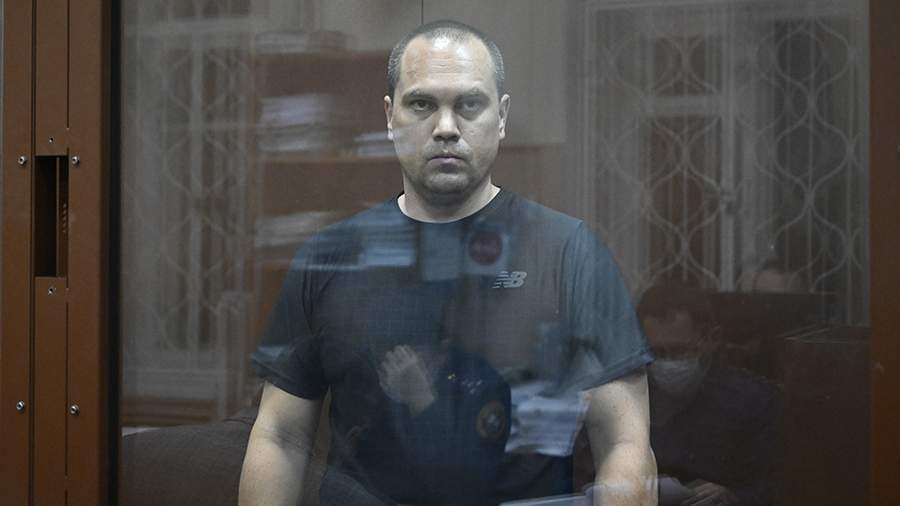
Kobzev is one of Navalny’s most experienced defense attorneys. He began representing Navalny in 2011, including after the latter’s detention during protests against alleged fraud in the State Duma elections.
Since then, Kobzev has been involved in nearly all major criminal proceedings brought against Navalny. At the time of his arrest in 2023, he was the only attorney who continued representing Navalny officially.
Alexey Liptser

Liptser joined the legal team later, during Navalny’s imprisonment. In addition to representing Navalny, he defended several high-profile defendants in politically sensitive cases, including one of the Khachaturyan sisters and activist Ildar Dadin.
Igor Sergunin

Sergunin visited Navalny at Penal Colony No. 3 in the Vladimir region, where the politician was held before being transferred to “Polar Wolf.” He met with him regularly and relayed his legal communications to the team.
The Arrest: October 2023
On the morning of October 13, 2023, investigative teams arrived simultaneously at each of the three attorneys’ homes. Searches lasted several hours, after which Kobzev, Liptser, and Sergunin were taken into custody.
That same evening, the court ordered them remanded to a pre-trial detention facility, without extensive hearings and without considering the arguments of the defense.
Almost simultaneously, two other members of Navalny’s legal team — Alexander Fedulov and Olga Mikhaylova — left the country fearing criminal prosecution. Later, similar criminal cases were initiated against them, and they were placed under arrest in absentia.
The Essence of the Charges: “Extremism” in Legal Practice
The basis for opening the criminal case was the transmission of Navalny’s letters from pre-trial detention and the penal colony to his associates.
Investigators claimed that the attorneys, “using their professional status,” were assisting Navalny in “performing the functions of a leader and organizer of an extremist organization.”
The “organization” in question was the Anti-Corruption Foundation, designated as an extremist entity in Russia in 2021.
Thus, routine actions by defense counsel — conveying a client’s statements to his family or team — were reclassified by investigators as participation in a criminal organization.
Human rights advocates point out that under this logic, any attorney could become a criminal defendant if their client is associated with the political opposition.
Trial and Sentencing: January 2025
On January 17, 2025, the Petushinsky District Court of the Vladimir Region issued sentences in the case concerning participation in an “extremist organization” (Part 2, Article 282.1 of the Russian Criminal Code):
-
Vadim Kobzev — 5.5 years in a penal colony
-
Alexey Liptser — 5 years
-
Igor Sergunin — 3.5 years
All three were also prohibited from practicing law for three years following completion of their sentences.
The prosecution had sought:
-
5 years and 11 months for Kobzev
-
5 years and 10 months for Liptser
-
5 years and 6 months for Sergunin
Conclusion
This case is unprecedented: never before in modern Russian history have three attorneys representing the same political prisoner been simultaneously sent to prison for actions carried out in the course of their professional duties.
The story of Kobzev, Liptser, and Sergunin is not merely an episode of political pressure. It demonstrates that today’s Russian state apparatus is prepared to prosecute not only political dissidents but also those who undertake their legal defense.
In effect, this is a warning to the entire legal profession: working on politically sensitive cases poses a direct threat to personal liberty.
And for this reason, the prosecution of Navalny’s attorneys has become one of the key markers of the destruction of the institution of legal defense and the independence of the legal profession in the country.
Vitali Ivaneko
