

Fuel Depletion: How Attacks on Oil Refineries Breached the Russian Economy
Moscow, July 20, 2026, Freedom Person
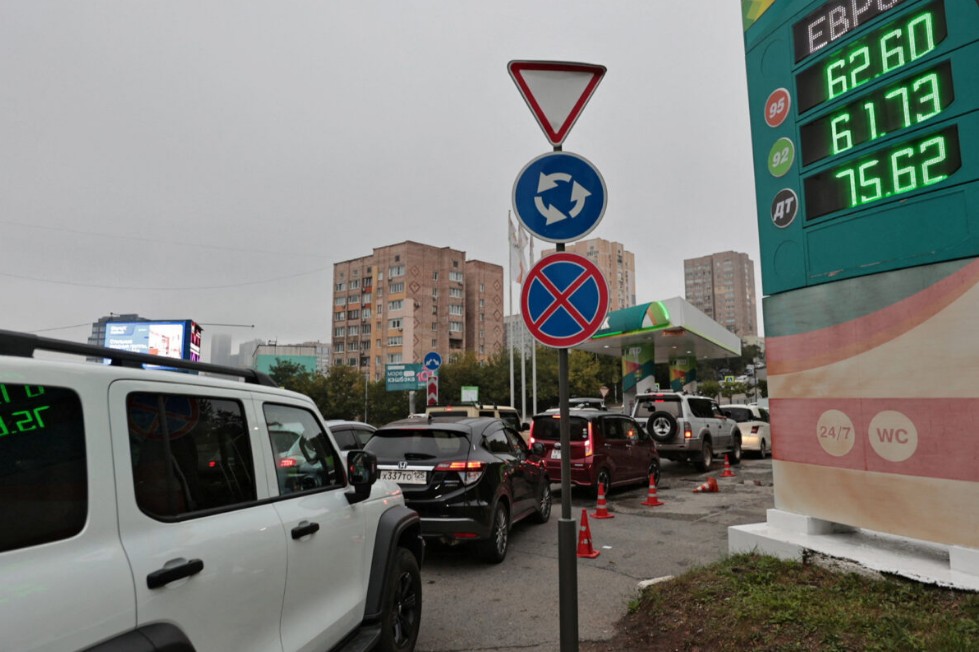
The summer of 2026 will enter the modern economic history of Russia not only with temperature records but also with a picture the country had long grown unaccustomed to seeing: "No Fuel" signs, multi-hour queues at retail fueling stations, and diesel generators humming in the dark for which there is nowhere to purchase diesel fuel. The motor fuel shortage, which in the spring still seemed like a localized issue of isolated border jurisdictions, by mid-year had acquired the character of a nationwide crisis.
According to the assessments of independent analysts, fuel shortages of varying degrees of severity have encompassed more than half of the constituent entities of the Russian Federation, affecting the lives of approximately 50 million individuals. The most dramatic situation has developed in the South of Russia and in Crimea, where regional authorities were compelled to resort to unprecedented measures—instituting strict rationing regulations on the per-capita sale of gasoline and diesel. The government in Moscow responded with an emergency and largely panicked measure: it authorized petroleum operators to roll back into the past, downgrading the environmental emissions standard of the manufactured fuel from the modern "Euro-5" to the toxic "Euro-3".
However, attempts to attribute the occurring events merely to seasonal demand or supply chain disruptions do not withstand scrutiny. The fuel depletion of 2026 is neither a market fluctuation nor a temporary supply interruption. It is the cumulative result of a targeted infrastructural war, compounded by technological isolation and the inflexibility of the state public administration framework. A country that for decades had cultivated the image of a global energy superpower has discovered a critical vulnerability in its own "circulatory system". And to understand how Russia arrived at gasoline rationing, it is necessary to dissect the three primary causes of this crisis: surgical strikes on refining facilities, the sanctions trap, and logistical paralysis.
Strikes on Oil Refineries, the Technological Trap, and Logistical Thrombosis
The foundation of the ongoing crisis was laid by methodical and precisely calculated Ukrainian unmanned aerial vehicle (UAV) attacks on Russian petroleum refining facilities. The scale of these operations in 2026 multiplied exponentially. According to data from a joint analysis by the Financial Times and the Polish analytical group Rochan Consulting, over the first six months of 2026 alone, Ukrainian drones successfully struck Russian oil refineries no less than 194 times.
By the end of spring, the situation became critical. As noted by the Reuters agency (and corroborated by the aggregated statistics of Meduza), by June 2026, not a single major petroleum refinery remained in the European part of Russia that had not been subjected to a strike at least once. The targets included not only primary processing units (Atmospheric and Vacuum Distillation Units) but also complex isomerization and cracking facilities.
Among the most illustrative attacks of 2026 that triggered the chain reaction of the fuel collapse:
-
Moscow Refinery (Kapotnya): The largest fuel supplier for the capital metropolitan region and one of the most politically significant facilities. According to data from the Carnegie Endowment and CEPA, in June 2026, the plant was subjected to a series of intensive strikes (specifically on June 12 and 18). Primary fractionating columns and storage facilities were damaged, compelling a cessation of production and instantly precipitating a fuel crisis in Central Russia.
-
Omsk Refinery (Gazprom Neft): The largest refinery in Russia, accounting for approximately 12.5% of all gasoline manufactured in the country. On July 6, 2026, despite the facility being located 2,700 km from the front line, it was successfully attacked by drones. As reported by Reuters, the enterprise suspended operations due to damage to key primary processing units, and repairs, according to expert estimates, will take months.
-
Perm Refinery (Lukoil): On April 29, 2026, drones struck the infrastructure of the facility and adjacent assets of the Transneft pipeline network (according to reports by The Moscow Times and BBC). The ensuing fire at the storage tanks and processing units raged for several days, resulting in hazardous chemical emissions and the suspension of regional logistics.
-
Baltic and Black Sea Terminals (Ust-Luga, Primorsk, Novorossiysk): In addition to the refineries themselves, logistics networks were subjected to strikes. According to calculations by Bloomberg and Reuters, the spring attacks on the export terminals of Ust-Luga and Primorsk reduced petroleum flows to one-third of their customary volumes, generating a bottleneck effect across the entire industry.
The cumulative effect of these strikes proved to be catastrophic. According to data from the Ukrainian General Staff (corroborated by independent sources at CEPA), by the beginning of July 2026, more than 42% of Russian gasoline production capacity had been incapacitated. On July 10, 2026, the International Energy Agency (IEA) officially downgraded its forecast for oil production in Russia, citing the total destruction of processing and export infrastructure. The attrition of nearly half of the production capacity created a physical supply vacuum that cannot be mitigated by any administrative decrees.
The Technological Trap: The Limit of "Import Substitution"
In peacetime, damage to a fractionating column would have meant financial losses, but repairs would have taken several weeks. In the realities of 2026, the Russian petroleum refining sector collided with a rigid wall of regulatory embargoes (sanctions), transforming every damaged component into a long-term liability.
Over the past twenty years, Russian oil refineries underwent large-scale modernization, relying exclusively on Western technologies. High-pressure pumps, specialized compressors, unique valve systems, and, most importantly, automated process control systems (Industrial Control Systems / ICS)—all of this was procured from Europe and the USA (Siemens, Honeywell, UOP, etc.).
When these components are obliterated by an explosion, it becomes evident that "technological sovereignty" in complex mechanical engineering has remained merely a slogan. Sourcing domestic equivalents of the requisite quality and dimensions is practically impossible, and Chinese manufacturers are far from always capable of offering one hundred percent interoperability. Parallel importation mechanisms, which function adequately for smartphones or automotive parts, fail when it concerns bespoke industrial equipment weighing tens of tons. As a result, the timelines for restoring the units extend from the scheduled three weeks to 6–8 months, converting a temporary capacity shortfall into a permanent one.
Logistical Thrombosis: Why Siberia Offers No Salvation
It would seem an obvious solution for a country of continental proportions to divert surplus fuel from intact refineries in the Urals and Siberia to the South, which is suffering from the shortage. In practice, however, this plan shattered against the harsh logistical realities of the summer of 2026. The railway network (RZD), serving as the primary transportation artery for liquid bulk cargo, is operating far beyond its carrying capacity, having morphed into a gigantic "logistical thrombosis".
Three interconnected factors contributed to this collapse:
Motive Power Deficit and Slashed Budgets The key issue of 2026 is a physical shortage of locomotives, which has reached the scale of an industry-wide disaster. According to expert assessments, due to the mass decommissioning of obsolete equipment and minimal procurement of new units, a deficit of 1,500 machines had formed on the network by 2026. The situation is exacerbated by the financial depletion of the monopoly: RZD's capital investment program for 2026 was radically slashed to 713.6 billion rubles. Because of this, the procurement of new motive power rolling stock remains at a historical minimum (the plan dictates fewer than 400 machines per annum).
Sources:
- https://vgudok.com/rassledovaniya/tyaga-rzhd-na-predele-deficit-lokomotivov-ugrozhaet-planam-rosta-perevozok-po
- https://www.interfax.ru/business/1067775
Concurrently, the equipment availability factor (technical readiness coefficient) of the existing fleet is rapidly declining: due to a shortage of Original Equipment Manufacturer (OEM) imported spare parts (primarily tapered roller cassette bearings), maintenance depots are compelled to withdraw heavy diesel locomotives into reserve en masse. There is simply a lack of motive power to haul gasoline tank cars on the non-electrified sections of the southern corridor.
The Collapse of "Railcar Turnaround" and "Abandoned Trains"
The technical deficit instantaneously translated into transportation paralysis. The primary indicator of the logistical crisis is the sharp increase in the "railcar turnaround" metric. By mid-summer 2026, the turnaround time for a tank car on routes from Siberia (for instance, from the Omsk Refinery) to the South had increased by a factor of 1.5 to 2.
Thousands of railcars laden with petroleum products sit idle for weeks at junction stations in the Volga region (at the Syzran junction) and at interchange points of the North Caucasus Railway. They aggregate the statistics of the so-called "abandoned trains"—consists that are officially removed from active service due to the unavailability of unassigned locomotives or train paths in the dispatch schedule. For the majority of the time, the railcars are not transporting fuel but rather functioning as rolling warehouses stranded in total gridlock.
The "War for the Rails" and Dispatching
Even if a locomotive is miraculously procured, fuel consists possess a low probability of rapidly penetrating the South. Throughput capacity has become the primary scarce resource, precipitating a veritable "war for the rails":
-
Department of Defense Priority: In the European portion of the network, a strict military transportation schedule (MTS) is in effect, granting absolute priority right-of-way to military trains.
-
Export Quota: Infrastructure is concentrated on servicing the Eastern Polygon (the BAM and the Trans-Siberian Railway). The mainlines are congested with export consists carrying coal and metals, the dispatch of which to Asia generates critically essential foreign exchange revenue.
Under these conditions, the domestic transportation of civilian liquid bulk cargo is executed on a residual basis. Security considerations also contribute to this liability: due to recurrent damage to relay cabinets and infrastructure on southern routes, stringent speed limits have been imposed. The average section speed of freight trains has plummeted to critical levels.
Consequently, the attempt to urgently dispatch thousands of gasoline tank cars to the Rostov Region, the Krasnodar Territory, or Crimea proved to be a logistically unfeasible mandate. Not only did logistics fail to mitigate the situation, but it became the very "thrombosis" that abandoned entire macro-regions to contend unilaterally with empty storage tanks.
The current fuel and logistical paralysis has demonstrated that RZD has reached its physical limit. The 1520 mm gauge requires not cosmetic remediation, but a fundamental technical revolution. By adopting the American "Heavy Haul" operational philosophy—heavy rail, ultra-high axle loads, distributed power, and long consists—Russia could transform its transportation network from a vulnerable mechanism susceptible to thrombosis into a flexible and highly resilient system capable of withstanding any external shocks.
However, a large-scale restructuring of the railway monopoly in accordance with the North American model—involving the extension of sidings, replacement of the permanent way, and the procurement of thousands of new high-horsepower locomotives—requires decades and multi-trillion capital investments. In the summer of 2026, the Russian economy simply did not possess this reserve of time.
RZD's technological impasse led to a scenario wherein an infrastructural liability instantaneously escalated into a macroeconomic catastrophe. The logistical thrombosis engineered an insurmountable physical supply vacuum in the South and Center of the country: Siberian gasoline became stranded thousands of kilometers from consumers' empty storage tanks. And wherever a total deficit of a baseline energy commodity arises, prices immediately surge. This uncontrolled price shock, hemorrhaging from commodity exchanges onto city streets, inflicted a devastating blow to the entire financial circulatory system of the country. It not only triggered a destructive inflationary spiral but also precipitated the paralysis of those institutions upon which human lives directly depended.
Economic Consequences: Price Shock and Institutional Paralysis
The Collapse of Public Procurement: Ambulances with Dry Tanks
Paradoxically, the initial casualties of the price shock in the fuel market were the entities upon which the baseline security of the state depends. In June 2026, the public procurement framework for the supply of fuels and lubricants serving the needs of hospitals (ambulances), the Ministry of Emergency Situations (fire suppression units), and municipal utility services effectively collapsed.
The mechanics of this institutional paralysis are straightforward: publicly funded entities are statutorily obligated to procure fuel through competitive bidding with a strictly fixed maximum contract price, which was calculated predicated upon the relatively stable spring quotations. However, when wholesale prices on the exchange skyrocketed, and a physical deficit manifested in the retail market, it became categorically commercially unviable for vendors (retail stations and fuel depots) to service government contracts. Participation in the tenders would entail operating at a severe deficit. Consequently, hundreds of auctions across the jurisdictions were declared void due to a lack of bids. The state apparatus, calibrated for rigid bureaucratic compliance, proved incapable of reacting expeditiously to market force majeure, exposing emergency services to the imminent threat of fleet immobilization.
A Rollback to the Past: The Toxic "Euro-3" Compromise
In an attempt to somehow saturate the domestic market, the government undertook an unprecedented measure—temporarily authorizing the production and circulation of automotive gasoline and diesel fuel compliant with the "Euro-3" standard. This regulatory standard, which had been proscribed in Russia as early as 2015, permits a sulfur and aromatic hydrocarbon content tens of times higher in comparison with the modern "Euro-5".
From the perspective of petroleum refiners, this is a salvation: the omission of complex deep purification processes (hydrotreating and desulfurization), the very units for which were compromised by UAV strikes, allows for a drastic increase in the volume of manufactured gasoline. But for the economy, this is a ticking time bomb. Modern engines of commercial trucks, agricultural machinery, and passenger vehicles are extremely sensitive to fuel quality. The mass utilization of "Euro-3" will inevitably precipitate the accelerated failure of catalytic converters, high-pressure fuel pumps, and fuel injectors. Under the conditions of a deficit of imported spare parts, this signifies an impending wave of commercial vehicle breakdowns, which will inflict a subsequent blow to logistics in the autumn and winter.
The Inflationary Spiral
Fuel is the lifeblood of the economy. Embedded within the cost of any commodity on a supermarket shelf is the price of the diesel fuel upon which the tractor-trailer delivered it from the manufacturing plant to the distribution center, and subsequently to the retail outlet. The sharp appreciation in the cost of fuel at wholesale depots and its physical scarcity triggered a powerful inflationary spiral. Transportation carriers commenced a mass revision of freight tariffs, factoring into them not only the inflated price of a liter of diesel but also the liabilities of downtime due to mechanical failures (courtesy of "Euro-3") or idling at empty fueling stations. This price shock was instantly passed through into the retail prices of staple foodstuffs and essential consumer goods, striking the wallets of citizens much more severely than mere figures on gas station price pylons.
The South in Darkness and Without Gasoline
The true proving ground upon which the crisis unfolded was the South of Russia—the Rostov Region, the Krasnodar Territory, and Crimea. Here, three factors converged, precipitating a "perfect storm." First, this is a frontline zone with a colossal volume of military logistics, consuming the lion's share of available diesel. Second, summer constitutes the peak of agricultural operations (the harvesting campaign) and the high tourist season, when vehicular traffic on southern highways multiplies exponentially. Third, it is precisely this region that found itself severed from the logistical supply lines routing Siberian fuel due to railway congestion.
The outcome was a transition to a scenario reminiscent of the late USSR or the crisis of the early 1990s: the implementation of a rationing system and strict quotas. Signs stipulating "Dispensing of no more than 20 liters per customer" at corporate-owned retail stations and the total absence of gasoline at independent fueling stations became an ordinary occurrence. For the resort region of Crimea, where the majority of tourists arrive via personal motor vehicles across the bridge, the fuel famine resulted in the paralysis of the tourism industry—individuals simply feared traveling to a destination from which they might fail to procure gasoline for the return trip.
Social Tension: The Trigger of Discontent
From a political standpoint, multi-hour queues for gasoline in municipalities darkened by rolling blackouts constitute an immensely powerful demotivator and a destroyer of the so-called "social contract" between the government and the populace.
Propaganda may attribute the hardships to Western machinations for an extended period, but basic domestic comfort (the ability to refuel a vehicle and operate air conditioning during a heatwave) has historically served as the cornerstone of civic loyalty. When individuals are incapacitated from resolving fundamental household issues for days at a time, their discontent is inevitably channeled. And while in the initial phase, the ire is directed at "greedy gas station owners" and local governors, the magnitude of the problem is so immense that it inevitably begins to erode the approval ratings of the federal center. The queues at fueling stations become a visible, material symbol indicating that the system is no longer capable of sustaining the customary order of affairs.
Forecasts and Development Scenarios
In the coming months, the government's response will be reduced to rigorous crisis management. To prevent the complete immobilization of emergency medical services and fire engines, the state will be forced to unseal its strategic reserves—Rosrezerv (the Federal Agency for State Reserves). However, the volume of these storage facilities is classified, and their depletion under the conditions of an ongoing conflict carries colossal risks to national security.
On the administrative track, one should expect the introduction of a complete, uncompromising embargo on the export of any commercial shipments of refined petroleum products. The authorities will also escalate pressure on oil companies, compelling them to fix prices at wholesale bulk distribution terminals through command-and-control methods. However, as historical experience demonstrates, price freezes amidst a physical supply deficit merely stimulate the shadow market: fuel will begin to be diverted to "preferred" vendors or sold under the table at double the rate.
Structural Transformation: From Exporter to Importer
In the medium-term perspective, a paradoxical scenario is emerging: Russia, which for decades ranked among the top three global suppliers of petroleum products, risks converting into a net importer. Confidential negotiations are already underway regarding emergency procurements of large consignments of gasoline and diesel from refineries in Belarus and Kazakhstan.
For the economy, this signifies a dual blow:
-
Fiscal Impact: The treasury is deprived of a substantial portion of foreign exchange earnings and tax revenues (Mineral Extraction Tax / MET, excise taxes, export duties) that constituted the state's financial cushion.
-
Capital Drain: Instead of generating revenue from fuel sales, the country is compelled to expend its diminishing foreign exchange reserves to purchase it from neighboring states at speculative prices.
The Front Line and the Rear: A Zero-Sum Game
The primary question preoccupying both military analysts and civil society is whether dry fuel tanks in the rear will impact front-line resupply. In the short term—no. The logistics of the Ministry of Defense are supplied via segregated, classified supply chains holding absolute right-of-way both on the railway network and in the allocation of volumes from surviving refineries.
However, the economy is a system of communicating vessels. Ensuring uninterrupted supplies to the armed forces amidst declining production means that the entire deficit will be shifted onto the shoulders of the civilian sector. The home front will subsist under a regime of "residual allocation." If attacks on infrastructure persist and the percentage of incapacitated capacity exceeds the critical threshold of 50%, the state will be forced to choose between supplying armored columns and fueling tractors for the harvest campaign. And that choice will not be rendered in favor of agriculture.
Conclusion: A New Energy Reality
The fuel crisis of 2026 exposed the fundamental illusion upon which the country's economic policy had been constructed over recent decades: the illusion of the invulnerability of a resource superpower. Infrastructural warfare transposed deep into the rear demonstrated that a centralized economy spanning vast distances is extremely fragile if a single component—primary petroleum refining—is severed.
The crisis demonstrated three inconvenient facts:
-
Sanctions operate with a delayed yet destructive effect, depriving key industries of the capacity for rapid recovery.
-
The commodity-based model is vulnerable: Extracting crude oil is insufficient—it is critically imperative to possess secured technologies for its refining and logistics.
-
The margin of resilience is finite: The state apparatus proved unprepared to manage the synchronization of multiple concurrent crises (fuel deficit, rolling power outages, collapse of public procurement).
The rolling back of environmental standards, empty service stations in the South, and gasoline rationing are not temporary hardships that can be waited out until autumn. These are indicators of the country's transition into a new economic reality—a reality in which deficits, price inflation, and technological degradation become not an instance of force majeure, but a long-term norm of existence. Until the root causes giving rise to this infrastructural vulnerability are rectified, Russia will be compelled to adapt to life under conditions of perpetual fuel depletion.
By Vitali Ivaneko
