

How the Varlamov Case Changed the Rules of the Game for Departed Russians
July 18, 2026. Freedom Person
For many years, Ilya Varlamov was an example of a successful public figure in Russia. He did not participate in political struggles, collaborated with regional authorities in the field of urbanistics, ran a profitable business, and amassed an audience of millions. Today, he is an emigrant convicted in absentia with an eight-year sentence in a correctional facility and an unprecedented fine of 99.5 million rubles.
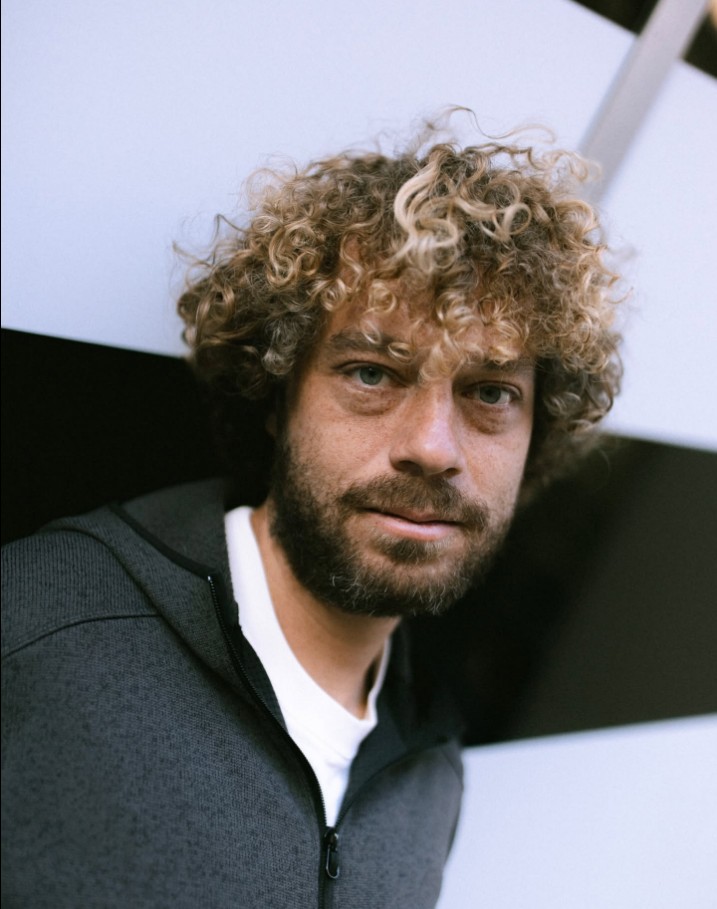
On July 16, 2026, a court of cassation affirmed this judgment. For state propaganda, this looks like a story about a person who ignored the requirements of the law and suffered the punishment. However, the mechanism of the rendered judgment deserves special attention. The Varlamov case may indicate the formation of a new precedent where combining different criminal statutes allows for simultaneously imposing lengthy prison sentences and levying extraordinarily large monetary penalties.
Victimless Crime
How do you turn a person talking about bike lanes and architecture into a criminal defendant facing multimillion-ruble financial sanctions?
The mechanism begins with designating a person as a foreign agent. Modern legislation allows conferring this status not only in the presence of foreign funding but also upon state-determined "foreign influence."
Following this, an obligation is imposed on the individual to accompany their publications with a specific disclosure label.
Many independent journalists and public figures consider such a disclaimer incompatible with their professional activities and refuse to use it on principle. As a result, civil penalties follow, and after repeated violations, criminal liability ensues under the statute for failing to comply with foreign agent obligations.
Exactly this mechanism is outlined in Varlamov’s sentencing order. The court noted that the blogger had twice been held administratively liable under Part 4 of Article 19.34 of the Russian Code of Administrative Offenses for violating the regulations of a foreign agent's activities, yet continued to publish materials without the mandatory disclosure label. Following this, he was indicted under Part 2 of Article 330.1 of the Russian Criminal Code.
Thus, the criminal case arises not from causing property damage or bodily injury, but as a result of repeated violations of the regulatory requirements of foreign agent legislation.
Why Two Years for Some, and Almost a Hundred Million for Others
To understand why the Varlamov case attracted special attention, it is useful to compare it with the case of Yuri Dud.
Dud was also charged with violating foreign agent obligations after refusing to use the mandatory disclosure label. At the end of 2025, the court sentenced him to less than two years in prison and a comparatively small fine of about 170,000 rubles.
At first glance, the violations look similar. However, the resulting sentences differ fundamentally.
The key difference is that Varlamov, in addition to violating foreign agent legislation, was indicted under the statute on disseminating "fakes" about the Russian army, in connection with his publications about the shelling of Ukrainian cities. It is exactly the joinder of these charges that largely determined the final structure of the sentence.
The most unusual feature of the case was not the prison term itself, but the combination of different types of penalties.
According to the judgment, the court found Varlamov guilty on two counts simultaneously: Part 2 of Article 330.1 of the Russian Criminal Code (evasion of duties stipulated by the legislation on foreign agents) and Item "d" of Part 2 of Article 207.3 of the Russian Criminal Code (public dissemination of knowingly false information about the use of the Armed Forces of the Russian Federation). Based on the totality of these offenses, he was sentenced in absentia to eight years in a medium-security correctional facility, a fine of 99.5 million rubles, and a four-year injunction banning him from administering websites.
That is, the court concurrently imposed an eight-year prison sentence on one count and exacted Varlamov's income for several years on the other.
It was exactly the statute on the violation of foreign agent obligations that allowed the application of an additional pecuniary penalty, which in total reached almost 100 million rubles.
Thus, the prosecution combined two different legal theories, which made it possible to simultaneously achieve both a lengthy prison sentence and an extraordinarily large financial penalty. The trial court agreed with this position, and the appellate and cassation courts upheld the conviction.
It is exactly this combination that makes the Varlamov case notable from a legal standpoint.
A Signal to the Departed
For a long time, Ilya Varlamov was not associated with the radical political opposition. He dedicated a significant part of his public activity to issues of the urban environment, architecture, and the quality of urban governance.
However, the sentence handed down may become an important signal for many Russian emigrants—entrepreneurs, journalists, IT specialists, public figures, and representatives of creative professions.
It shows that criminal prosecution can now be accompanied not only by lengthy prison sentences but also by the exaction of extraordinarily large sums. If such a precedent becomes more widespread, the financial consequences of criminal cases for public figures residing outside of Russia could become significantly more severe than they were just a few years ago.
Striking such a figure carries a clear message for the entire creative and entrepreneurial emigration. The State is broadcasting a simple idea: there are no longer any "safe" topics. It is not enough simply to abstain from joining political parties. If you publicly disagree with the actions of the State, your former moderate status will not protect you, and all your assets, business infrastructure, and real estate in Russia will be seized to satisfy artificially generated multimillion-ruble fines.
By Vitali Ivaneko
