

August 24, 2026 - Freedom Person
On the morning of August 5, 2026, Russia launched a strike package of 28 missiles at Ukrainian territory, 24 of them ballistic. Ukrainian Air Force reporting logged each one. Not a single missile was intercepted. The Ukrainian Air Force's own after-action note described complete failure to engage the incoming package — no hedging, no partial credit. Twenty-eight launched, twenty-eight hit.
That number sits inside a larger statistical arc. In July 2026 alone, according to Ukrainian tracking data cited across multiple outlets, Russia fired 195 ballistic missiles at Ukrainian territory. Ukrainian air defenses intercepted 29 of them — a rate of roughly 15 percent. For context: earlier in the war, Ukrainian officials and Western analysts routinely cited interception rates for the Patriot system in the 70–80 percent range against ballistic targets.
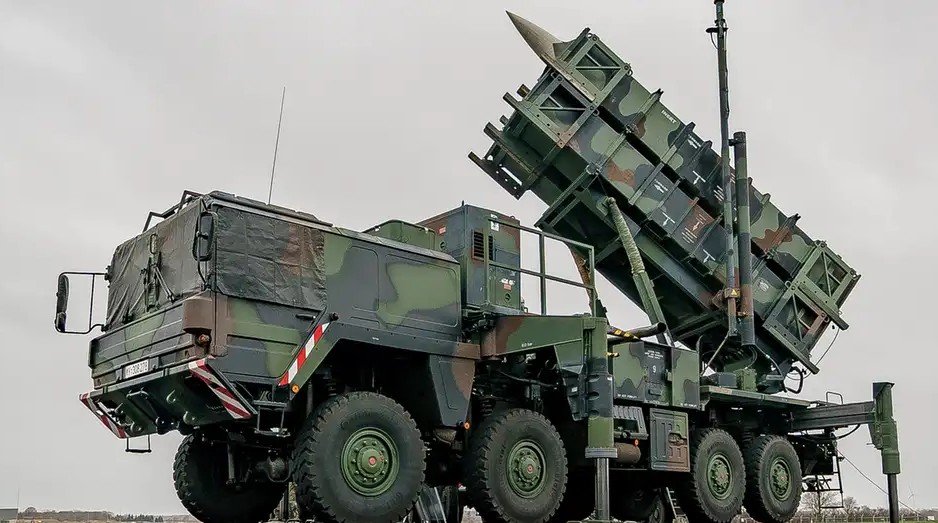
The Patriot PAC-3 is the only air-defense system in Ukraine's current inventory with a confirmed capability against ballistic missiles. Ukraine has operated it in varying quantities since April 2023. As of August 2026, the bottleneck is not the launchers or the radars — it is the interceptor missiles themselves.
The Interceptor Arithmetic
A PAC-3 MSE (Missile Segment Enhancement) interceptor costs between 2-4 million per round. A full Patriot battery — radar, fire-control unit, launchers, and missiles — runs approximately $1 billion. The system is designed to carry 12 interceptors per launcher in its standard configuration, with typical battery loadouts varying by mission profile.
Ukraine's stated requirements have shifted upward steadily since full-scale invasion in 2022. In 2023, Zelensky publicly cited a need for 50 complete Patriot systems. By spring 2025 the figure had narrowed in urgency terms — at least ten systems capable of engaging Russian ballistic missiles. By October 2025, Ukrainian and American officials were describing a prospective long-term contract covering 25 Patriot systems. By July 2026, the publicly articulated ask had changed character: not full batteries but "hundreds" of additional interceptor missiles, for systems Ukraine already operates, in time for the coming winter heating season.
Lockheed Martin produced 620 PAC-3 MSE interceptors in 2025 — the highest annual output the program has achieved. The component supply chain for a single PAC-3 MSE, from raw material to finished round, takes 24 to 30 months to traverse. That production ceiling and that lead time define the hard boundary of any near-term supply solution.
What the Iran Campaign Consumed
Between late spring and early summer 2026, the United States conducted an extended air campaign against Iran. The campaign lasted 39 days. By its end, according to CNN reporting cited by multiple outlets including the Financial Times, the US military had expended approximately 65 percent of its Patriot interceptor stockpile and roughly 80 percent of its THAAD interceptors.
For the Gulf states that also participated in active air defense during this period — absorbing Iranian ballistic and cruise missile salvos — the expenditure figures are starker. Across Saudi Arabia, the UAE, Israel, and associated partners, an estimated 2,775 Patriot-class interceptors were fired during the campaign. Total anti-ballistic missile expenditure across the region over those 39 days is estimated at between 4,500 and 5,000 rounds.
On July 28, 2026, Volodymyr Zelensky traveled to Washington for a meeting with Donald Trump in the Oval Office. His request, as subsequently reported by the Financial Times and Ukrainska Pravda, was for hundreds of additional PAC-3 interceptors ahead of winter. Trump declined. The stated reasons: depleted US stockpiles and the operational requirement to protect American military facilities and allied partners in the Middle East, where the post-Iran environment remained volatile.
The same day — July 28 — Ukraine signed licensing agreements with both primary Patriot system manufacturers: Lockheed Martin and Raytheon. The agreements cover domestic Ukrainian production of interceptor components. Given the 24-to-30-month supply chain, no interceptor manufactured under those licenses reaches operational inventory before late 2027 at the earliest — well past the winter of 2026–27.
Washington had separately signaled, in the weeks before the Oval Office meeting, a possible willingness to allow Ukraine to manufacture Patriot missiles under license. By July 28, those signals had cooled. The licensing deals were signed, but the broader US-to-Ukraine supply pathway for the coming winter was effectively closed.
The Seoul Calculation
Ukraine has formally sought Korean air-defense systems since February 2022. The system in question is the KM-SAM Block II, known as Cheongung-II — South Korea's domestically developed medium-range surface-to-air missile system, designed to engage aircraft, cruise missiles, and ballistic missiles at ranges and altitudes overlapping with the lower tier of Patriot's engagement envelope.
In early July 2026 — before the Oval Office meeting, before August 5 — Oleksandr Kamyshin, Zelensky's senior strategic advisor, traveled to Seoul. He met officials from South Korea's Ministry of National Defense and its Defense Acquisition Program Administration. His specific request, as described in subsequent reporting: the modern PAC-3 interceptor variant, meaning PAC-3 MSE rounds for Patriot systems Ukraine already operates, from South Korean stockpiles.
That framing is precise. Kamyshin was not asking for Cheongung-II batteries or KM-SAM II systems. He was asking for PAC-3 MSE missiles — the same American-made rounds that Seoul fields for its own Patriot batteries, acquired separately through US foreign military sales. South Korea operates Patriot systems alongside its KM-SAM inventory as layered national air defense. Its Patriot holdings include PAC-3 interceptors.
The request did not produce a commitment. By August 10–11, senior South Korean government officials were described in Korea Herald reporting as maintaining a "cautious stance" on Ukraine's defense requests, with the timing of that restatement coinciding with fresh reporting on additional North Korean troop deployments to Russia. On August 24, the South Korean newspaper Chosun Ilbo published a report that Seoul had again declined to supply PAC-3 interceptors — the specific account subsequently cited by RIA Novosti, Rambler, and other Russian-language outlets, and by defence-ua in English.
What KM-SAM II Actually Did
Before examining Seoul's stated rationale, it is worth reviewing what the Cheongung-II system demonstrated in its first known combat deployment.
During the Iranian missile campaign, the UAE — which had acquired Cheongung-II batteries from South Korea — employed the system in active defense of its territory. Two batteries engaged incoming Iranian ballistic missiles. Post-engagement reporting, including coverage in Defence Security Asia and the South China Morning Post, put the outcome at 29 targets destroyed out of 30 assigned, approximately 60 interceptors fired, a hit rate of 96 percent.
The South China Morning Post's Asia coverage framed this as performance that "rivalled, and in some cases exceeded" the US Patriot's results in the same campaign. The per-unit cost differential cited across multiple analyses: Cheongung-II interceptors run at roughly one-third the price of PAC-3 MSE rounds.
On paper, this is a significant datapoint. A system that can engage the same class of ballistic targets at 96 percent hit rates, at one-third the cost per shot, and that South Korea can supply — those are the parameters that make Kamyshin's July trip to Seoul intelligible.
The parameters that make a meaningful transfer difficult are the ones downstream of technical performance.
The Production Ceiling
South Korea's annual manufacturing capacity for KM-SAM II missiles, as cited by Defense Express drawing on Korea Economic Institute figures, stands at approximately 300 rounds per year. Battery production capacity is roughly eight units annually.
That output is already allocated. Current production commitments distribute across the following buyers:
- UAE: 12 batteries ordered; deliveries ongoing
- South Korea (own forces): 7 batteries under procurement
- Saudi Arabia: 10 batteries ordered; first delivery scheduled for 2028
- Iraq: 8 batteries ordered
- Qatar and Kuwait: prospective orders under negotiation
Stacking those figures against the Gulf campaign's expenditure numbers — 4,500 to 5,000 anti-ballistic interceptors in 39 days, across a regional conflict that lasted little more than a month — illustrates the mismatch. South Korea's entire annual KM-SAM II output, if redirected in full to Ukraine, would cover roughly six percent of the ammunition volume expended in the Gulf campaign. Ukraine's July 2026 interception data suggests the country needed to fire approximately 67 PAC-3 interceptors to achieve its 29 successful engagements that month (working from a typical salvo size assumption); it failed to engage 166 additional ballistic missiles entirely.
The KM-SAM II also introduces a separate logistical factor. Ukraine's Patriot operators have trained on that system, built maintenance and parts chains around it, and accumulated two-plus years of combat experience with its radar and fire-control architecture. Standing up a parallel KM-SAM II operational chain — training crews, establishing spare parts supply, integrating a different battle-management interface — is a months-long process under peacetime conditions.
Three Reasons and One Inconsistency
South Korean officials have articulated a consistent set of justifications for declining Ukraine's air-defense requests since 2022.
North Korea. South Korea maintains it must preserve advanced air-defense inventory and production capacity against North Korean ballistic and cruise missile threats, which have grown in both volume and sophistication across the same period. Seoul's calculus, as stated by government officials including those cited in August 2026 Korea Herald reporting, holds that diverting KM-SAM II systems or PAC-3 interceptors to Ukraine directly degrades South Korean readiness against a live and escalating threat 35 miles north of its capital.
Russia. South Korean government sources, as reported by Rambler and other outlets citing official Korean statements, have explicitly cited concern about Moscow's potential reaction to lethal arms transfers to Ukraine. This concern has intensified since June 2024, when Russia and North Korea signed a mutual defense pact — a formal treaty that, in Seoul's internal assessment, links the security calculus on the Korean Peninsula directly to the outcomes of the war in Ukraine. North Korean artillery ammunition shipments to Russia, followed by the deployment of North Korean ground troops to Russian-occupied Ukrainian territory, have sharpened this linkage in Korean strategic planning circles.
Legal framework. South Korea maintains a standing policy against exporting weapons to countries engaged in active armed conflict. Government officials have cited this regulation consistently when declining Ukrainian requests. The Korea Times reported in early 2024 that the policy extends to a formal "no lethal weapons to Ukraine" position, conditioned on monitoring developments in Russia-North Korea military cooperation.
Against those three stated reasons sits a documented inconsistency. During the same Iranian missile campaign in which the UAE employed its Cheongung-II batteries, South Korea supplied additional KM-SAM II interceptors from its own military stockpiles to the UAE as military assistance — transferring ammunition to a country engaged in active air combat against ballistic missile attacks. Defence-ua reported this transfer, noting that it directly contradicts the stated export-restriction rationale as applied to Ukraine. The UAE, at the moment it received South Korean interceptors from national stockpiles, was absorbing Iranian ballistic missile salvos. The legal basis for distinguishing that transfer from a transfer to Ukraine has not been publicly explained by South Korean officials.
The Expanding Korean Export Map
While declining Ukraine's requests, South Korea has moved aggressively to expand Cheongung-II's commercial footprint elsewhere.
The UAE deal — 12 batteries — represents the largest single KM-SAM II export contract to date. Saudi Arabia's 10-battery order, with first delivery in 2028, positions the system as a Gulf standard alongside American Patriot hardware. Iraq's 8-battery order adds a third Gulf customer. Qatar and Kuwait are in active discussions, according to Defence Express reporting.
Poland has purchased Korean K2 tanks and K9 howitzers in volumes that make it one of the largest customers of Korean defense exports globally, though Warsaw's purchases have centered on land systems rather than air defense. The Philippines, Australia, and several Southeast Asian nations have engaged in preliminary discussions with Korean defense contractors on various system categories.
The Cheongung-II's UAE combat debut, with its 96-percent hit rate and its cost-per-kill advantage over Patriot in the same engagement environment, has become a marketing reference point for the Korean defense export drive. Korean defense officials, as quoted in multiple Asian security publications, have described the UAE performance as "definitive proof of concept" for the system's export case.
The difficulty of accommodating Ukraine is therefore partly a production arithmetic problem and partly a prioritization problem: South Korea has made binding contractual commitments to Gulf buyers who represent strategically significant long-term customers, at a moment when its annual output of roughly 300 missiles cannot simultaneously service those contracts and absorb a new major customer.
What the Licensing Deals Mean — and Don't Mean
The Lockheed Martin and Raytheon licensing agreements signed on July 28, 2026 deserve precise reading. Ukraine is acquiring the right to manufacture PAC-3 MSE interceptor components domestically. This is significant as a long-term industrial policy outcome and as a hedge against future supply disruptions. It is not a near-term supply solution.
The 24-to-30-month component supply chain means that a missile whose production begins in August 2026 does not emerge as a ready interceptor until between August 2028 and February 2029, at the outer boundary. Any interceptor needed before winter 2026–27 — meaning before roughly March 2027 — must come from existing stockpiles of existing suppliers, not from newly established Ukrainian production lines.
The licensing deals also carry an embedded assumption: that Ukraine can establish and maintain secure manufacturing facilities, source or receive the necessary component inputs, and build a qualified workforce, all while under active Russian air attack against its industrial infrastructure. Russia has systematically targeted Ukrainian energy production, rail logistics hubs, and industrial facilities throughout the war. Whether a Patriot interceptor production line can operate under those conditions is not addressed in any public reporting.
European Holders
The United States and South Korea are not the only actors with Patriot systems or PAC-3-class inventory. Germany, the Netherlands, Spain, and Greece all operate Patriot batteries. Japan operates Patriot PAC-3 as its primary ballistic missile defense layer. Israel has a separate domestic Arrow and Iron Dome architecture but has also engaged in complex negotiations over potential Ukrainian air-defense transfers throughout the conflict.
Germany transferred at least one Patriot battery to Ukraine in 2023 and has engaged in ongoing discussions about additional transfers and interceptor resupply. The Netherlands co-operates a Patriot battery shared with Germany. Neither country has announced a commitment to significant additional interceptor transfers in the August 2026 reporting cycle.
On August 22, Emmanuel Macron met with Keith Kellogg — Trump's former envoy for Ukraine — in what became a separate track of Ukrainian air-defense diplomacy. Zelensky also met Kellogg the same day in Kyiv, reiterating Ukraine's readiness to purchase interceptors from any partner willing to supply them. Macron publicly pledged to help Ukraine secure Patriot missiles from international partners and confirmed France's willingness to grant licenses for missile production. France does not operate Patriot systems; its air-defense inventory centers on the SAMP/T (Aster 30-based) system, which Ukraine also operates in limited numbers and which has a different interceptor. The French licensing pledge thus references the broader industrial licensing framework rather than direct supply from French stockpiles.
Macron separately pledged to accelerate French deliveries — the specific system and timeline are not detailed in available reporting.
The THAAD Variable
The Iran campaign's consumption figures for THAAD — approximately 80 percent of US stockpiles expended — introduce a layer to the broader interceptor landscape that the Ukraine-specific reporting largely bypasses.
THAAD (Terminal High Altitude Area Defense) operates at a higher altitude tier than Patriot PAC-3 and is designed specifically for ballistic missile intercepts at longer range. The US had deployed THAAD to the Gulf region prior to and during the Iranian campaign. Its near-total consumption during 39 days of combat represents a separate US readiness concern that constrains American options globally, not only vis-à-vis Ukraine.
South Korea operates THAAD batteries — one US-operated THAAD battery has been stationed at the Seongju site in South Korea since 2017, a deployment that remains domestically controversial. The question of THAAD interceptor availability from Korean-theater stocks has not surfaced in public reporting on Kamyshin's July talks.
Raytheon (now RTX) produces THAAD interceptors; the production rate and current stockpile figures are classified at the system level, though the 80-percent-depletion figure for US military holdings has been reported publicly. Rebuilding US THAAD inventory to pre-Iran-campaign levels, at current production rates, is a multi-year process.
Timeline Compressed
|
Date |
Event |
|
2022 onward |
Ukraine repeatedly requests Cheongung-II/KM-SAM II from Seoul; each request declined |
|
June 2024 |
Russia and North Korea sign mutual defense pact |
|
Spring 2025 |
Zelensky publicly states need for at least 10 Patriot-capable systems urgently |
|
October 2025 |
Ukraine-US talks on prospective 25-Patriot long-term contract reported |
|
Early July 2026 |
Kamyshin visits Seoul; requests modern PAC-3 interceptors from Korean Patriot stocks |
|
July 2026 |
Russia fires 195 ballistic missiles at Ukraine; 29 intercepted |
|
July 28, 2026 |
Trump declines Zelensky's request for hundreds of Patriot interceptors in Oval Office meeting; Ukraine signs licensing deals with Lockheed Martin and Raytheon same day |
|
August 5, 2026 |
Russian strike of 28 missiles (24 ballistic); Ukraine intercepts zero |
|
August 10–11, 2026 |
Seoul reaffirms "cautious stance"; officials cite North Korean troop deployments to Russia |
|
August 22, 2026 |
Zelensky meets Kellogg; Macron pledges to help Ukraine find Patriot-holding partners, offers licensing |
|
August 24, 2026 |
Chosun Ilbo reports Seoul declined to supply PAC-3 interceptors; RIA Novosti and others amplify |
The Cost Layer
Cost has featured in Ukrainian diplomacy as a lever — Zelensky has repeatedly stated readiness to purchase interceptors rather than receive them as military aid, positioning the Ukrainian ask as a commercial transaction rather than a grant-dependent one. The framing surfaces in his August 22 conversation with Kellogg, where he reiterated Ukraine's willingness to buy from any partner.
The commercial arithmetic:
- PAC-3 MSE interceptor: $2–4 million per round
- Cheongung-II interceptor: approximately one-third of PAC-3 MSE unit cost, placing it in the 700,000 –1.3 million range
- Full Patriot battery: approximately $1 billion
- Full Cheongung-II battery: proportionally cheaper, though specific figures vary by contract
Ukraine's ability to fund large-scale interceptor purchases from national budget resources is constrained; its 2026 defense budget is heavily dependent on Western transfers and loan guarantees. Whether a commercial purchase framing — rather than a grant or aid framing — materially changes the supply calculation for any of the potential suppliers has not been addressed in available reporting. Seoul's refusals have been framed in terms of legal policy, strategic risk, and capacity, not price.
What Has Not Moved
Four supply channels have been proposed or sought for Ukraine's PAC-3 class interceptors as of August 24, 2026, none of which is delivering material at scale:
United States (direct supply): blocked by inventory depletion after Iran campaign and Trump's July 28 refusal.
United States (licensing): deals signed July 28; no Ukrainian-manufactured interceptor available before late 2027 at earliest.
South Korea (PAC-3 from stockpiles): declined, per August 24 reporting; formal position held since 2022 on lethal arms to Ukraine.
South Korea (KM-SAM II): not confirmed as requested in July 2026 talks; production capacity committed to Gulf contracts; requires new logistics and training chain for Ukraine.
European Patriot holders (Germany, Netherlands, Spain, Greece): contributing at margins; no announced large-scale interceptor transfer commitment in August 2026 reporting cycle.
France (SAMP/T and licensing): Macron pledges to accelerate and to assist Ukraine in finding partners; specific deliverable and timeline not specified in available reporting.
Israel: not present in current (August 2026) reporting on air-defense diplomacy.
Production Reality
The global shortage of PAC-3-class interceptors is not a Ukraine-specific supply problem. It is a production-rate problem that predates August 2026 by several years.
Lockheed Martin's 620-interceptor output in 2025 was an increase over prior years. The PAC-3 MSE production line has faced component shortages — in particular for seekers, propulsion subsystems, and guidance electronics — that have constrained throughput despite orders significantly exceeding production capacity. The US Army has sought production rate increases from Lockheed Martin since at least 2023; the 620-unit 2025 figure represents progress against a multi-year backlog.
At 620 units per year, global PAC-3 MSE production covers less than 14 percent of the interceptors expended during the 39-day Iran campaign, counting only the Gulf coalition's estimated 4,500–5,000 rounds. Restoring pre-campaign inventory levels for the United States alone, at current production rates, would require years even without further expenditure.
South Korea's 300-unit annual KM-SAM II output, set against the same reference figures, covers approximately 6–7 percent of the Iran campaign's total anti-ballistic expenditure.
The Winter Horizon
Russia's ballistic missile campaign against Ukrainian infrastructure has followed a seasonal pattern: strike volumes increase in autumn and winter, targeting heating infrastructure, power generation, and distribution networks, with the aim of making heating and electricity unavailable in civilian areas during the coldest months. The pattern was established in winter 2022–23, intensified in 2023–24, and continued through 2025–26.
Ukraine enters autumn 2026 with a documented and unclosed gap between its defensive capability and the incoming threat. The July statistics — 195 launches, 29 intercepts — and the August 5 total failure to engage represent the pre-winter state of the system. Neither the licensing deals (too slow), the Seoul approach (declined and capacity-constrained in any case), the European holders (contributing at margins), nor the French diplomatic track (commitments not yet specific) closes that gap before heating season.
Zelensky's public posture — readiness to buy from any supplier, at commercial prices, without conditions — has been stated consistently since at least August 2022 and has not produced a supply breakthrough at the scale the July and August 2026 data implies is needed.
By Roman Severin
