
August 14,2026 - Freedom Person
I spent several years working within Russian law enforcement. I am not going to reconstruct what I saw from news reports or academic papers. I am going to describe what I know directly.
The Russian criminal justice system does not function the way its legal codes suggest. On paper, it mirrors European standards — presumption of innocence, right to counsel, independent judiciary. In practice, the conviction rate in criminal cases exceeds 99 percent. That number is not a sign of an effective prosecution service. It is a sign of a system in which the outcome is determined before the trial begins.
Within that system, there is a category that investigators and case officers understand intuitively, though it is never written in any regulation: the *valuable detainee*. This is not about guilt or innocence. It is about utility. A person's value is not determined by what they did — it is determined by who will ask questions about them.
A Russian citizen who falls into the system has, in most cases, only family and perhaps a lawyer. A foreign citizen — especially an American — has a consulate, advocacy groups, senators, and a government with significant diplomatic and economic leverage. That changes how the case is handled. Not always automatically. But consistently enough that it is not coincidence.
The system does not hunt Americans. But when an American appears in it, the system immediately recalibrates. The question shifts from "what did this person do" to "what is this person worth".
That distinction is the key to understanding everything that follows.
One Came Home — and What His Case Reveals
On August 11, 2026, Robert Gilman — a 32-year-old U.S. Marine veteran — was released from Russian custody and boarded a plane home. He is back in the United States. He can recover. He can be with his family. That is genuinely good news, and his family deserves every moment of the reunion they waited four years for.
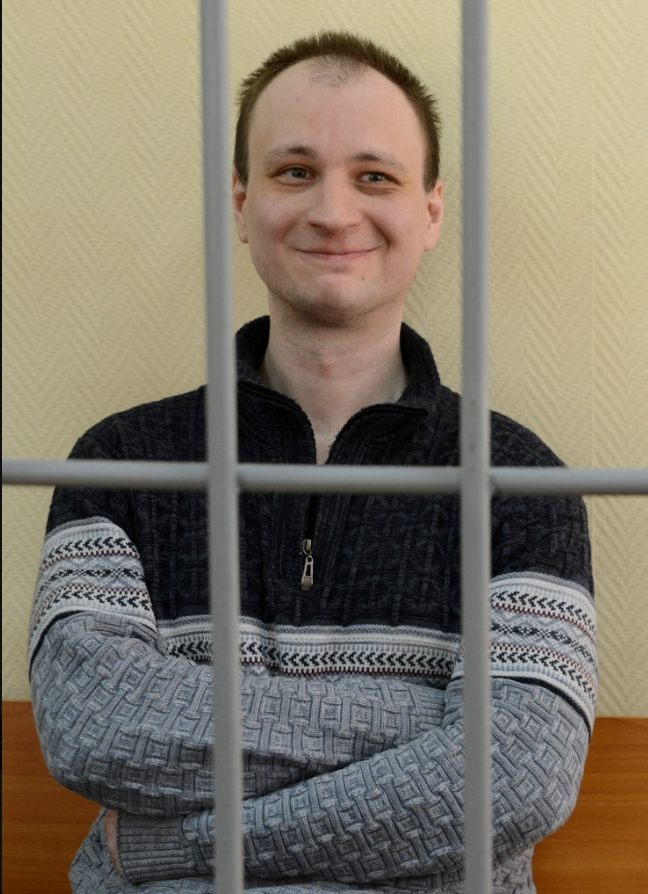
But how Gilman's story unfolded matters as much as how it ended.
In 2022, Gilman was removed from a train in Russia for causing a disturbance. A confrontation with police followed. He was arrested and handed an initial sentence of three years.
He did not serve three years and go home.
In 2024, while in custody, he was convicted of attacking a prison inspector during a cell check, beating an investigator, and assaulting a guard. His sentence was extended to seven years. After a subsequent conviction for assaulting prison guards, it was extended again — to ten years.
Whether those incidents were acts of desperation by a man being systematically broken, or fabricated charges designed to extend his detention, is a question that Russian courts — with their 99-percent conviction rate — were never going to answer honestly. What the documented record shows is this: Gilman was subjected to hours-long forced exercise sessions, administration of psychotropic drugs, physical mistreatment, and — according to his advocacy group, Global Reach — repeated pressure to sign contracts to fight for Russia in Ukraine.
By June 2026, he had been transferred from the prison hospital to a psychiatric ward in what medical staff described as a "dissociative stupor." His condition was reported to his family as dire and life-threatening. Senator Ed Markey, whose office had worked with the Gilman family for two years, stated that Gilman had become essentially catatonic, unable to interact or eat, and had developed severe pneumonia.
He was released in August 2026 — described officially as a humanitarian gesture by President Putin, with no exchange demanded.
The framing deserves a closer look.
A living American in a Russian prison is a diplomatic asset — a card that can be played at a moment of Russia's choosing. A dead American in a Russian prison is an international scandal, an investigation, a crisis that complicates every conversation Moscow wants to have with Washington. Gilman had crossed the line from asset to liability. He was released before he died — not out of generosity, but because a released half-broken American is more useful than a dead one.
He is home. He will heal. That is what matters for him and his family.
The Scale of What Is Normal
To understand what is happening to the Americans detained in Russia, you have to understand what is happening to everyone else.
According to OVD-Info — the independent Russian human rights monitoring organization, now operating under severe state pressure and labeled a "foreign agent" — as of August, 2026, there are 4,931 people in Russia currently subject to politically motivated criminal prosecution. Of those, 1,921 are physically imprisoned — held in pre-trial detention centers, penal colonies, or prison hospitals.
These are people prosecuted for social media posts, for attending protests, for donations to Ukrainian humanitarian funds, for possession of books, for saying the wrong word to the wrong person. The charges vary. The sentences have been growing: the average term in politically motivated cases rose from six years in 2021 to eight years in 2025.
American detainees do not exist separately from this reality. They are inside it — subject to the same institutions, the same pressure tactics, the same systemic indifference. The only variable is the international visibility that their citizenship creates.
That visibility is not nothing. It may, in some cases, be everything.
The Value of the Asset — and the Price of Dying
Here is the part that rarely gets said directly.
American citizens held in Russian prisons are, by all available evidence, treated significantly — significantly — better than Russian citizens held in the same system for political reasons. Not well. Not humanely. But better enough that they tend to survive when others do not.
This is not an accident of goodwill. It is a function of calculated value.
A Russian political prisoner has no leverage. When he dies — and they do die — no government calls Moscow. No senator holds a press conference. The system absorbs the death and moves on. The human rights organization Memorial has documented at least 68 political prisoners who have died in Russian custody over the past fifteen years. In the first four months of 2026 alone, at least six political prisoners died in state custody. 2024 was described by monitors as a year of "unprecedented" deaths in politically motivated cases — including Alexei Navalny, who was not the only one, simply the one the world noticed.
An American political prisoner is different. He has a government that will ask questions. He has advocacy organizations, family members who speak to journalists, senators who issue statements. If he dies in custody, the consequences are unpredictable and potentially significant.
So the system keeps him alive. Not out of humanity. Out of calculation.
This is what using people as political chess pieces means in practice. It does not mean Russia arrested each of them with this specific purpose in mind. It means that once they were inside the system, the system recognized their value and adjusted accordingly. Their American citizenship is not what got them arrested. It is what is keeping them alive — and it is what is keeping them from going home.
Gilman is the case where the calculation broke down. His health deteriorated past the point where the math held. They released him before he became a dead American — which is the one outcome the system is designed to avoid.
The others remain because, for now, the calculation still holds.
The Seven: Who Is Still There
These are the Americans currently held in Russian detention, as identified by the James W. Foley Legacy Foundation, advocacy groups, and U.S. officials. They are not statistics. They are people.
|
Name |
Detained |
Charge |
Sentence |
|
Stephen Hubbard |
Apr 2022 |
"Mercenary" activity |
6 yrs 10 mo |
|
Olga Jezler |
Jun 2022 |
Drug trafficking (CBD oil) |
Undisclosed |
|
Andre Khachatoorian |
Dec 2021 |
Illegal firearm (transit) |
8 years |
|
David Barnes |
Jan 2022 |
Abuse (custody dispute) |
21 years |
|
Chuck Zimmerman |
Jun 2025 |
Unknown (seized at sea) |
Pending |
|
Aleksandr Antonov |
Mar 2025 |
"Terrorism" (Telegram posts) |
6 years |
|
Michael Leake |
Jun 2023 |
Drug trafficking |
13 years |
Robert Gilman — detained 2022, released August 11, 2026, after four years in custody.
Stephen Hubbard, 73
Michigan native. Retired English teacher.
Hubbard had lived in the Ukrainian city of Izyum since 2014 — teaching, building a life, growing old in a place he had come to call home. On April 2, 2022, Russian forces occupied Izyum. Hubbard was there when they arrived.
He was arrested and charged with "participation as a mercenary" in the armed conflict in Ukraine. His family and supporters contest the charge entirely. Under international humanitarian law, a resident of a country who joins its territorial defense is not a mercenary — a distinction that Russian courts chose to ignore.
In October 2024, a Moscow court sentenced him to six years and ten months in a penal colony. He is now 73 years old. His health is deteriorating. Secretary of State Marco Rubio has publicly named him as a priority case.
He has been inside the system for more than four years. He is still there.
Olga Jezler
Entrepreneur. U.S. permanent resident.
In June 2022, Jezler boarded a flight to Russia. Her sister had been diagnosed with cancer. She was going to help care for her.
At Sheremetyevo Airport in Moscow, customs officials stopped her. In her luggage: vitamins, dietary supplements, and capsules of CBD oil — the same items she had carried on previous trips without incident. CBD is a legal, widely available product across the United States, sold on pharmacy shelves and in grocery stores.
She was charged with drug trafficking.
She is still there.
Andre Khachatoorian
American citizen.
On December 27, 2021, Khachatoorian was passing through Moscow on a layover — a transit stop, not a destination. Russian customs officials searched his checked luggage and found a licensed, legally owned firearm, properly secured in accordance with standard U.S. travel regulations.
Carrying a legally owned firearm in checked baggage, declared to the airline, is lawful procedure in the United States. It is not lawful under Russian law. He never entered Russia by choice. He was in transit.
He was sentenced to eight years in a penal colony.
He is still there.
David Barnes, 67
American citizen. Father.
Barnes's children were taken from Texas to Russia by their mother following a custody dispute. He went to Russia to find them. His ex-wife filed accusations of abuse — accusations that U.S. authorities had previously investigated and found unsubstantiated.
A Russian court sentenced him to twenty-one years of hard labor.
Twenty-one years. For a custody dispute that U.S. courts had already reviewed. He is sixty-seven years old.
He is still there.
Chuck Zimmerman
U.S. Navy veteran.
On June 17, 2025, the Russian Navy detained Chuck Zimmerman while he was sailing. He was not in Russian territorial waters. He was in international waters — governed by international maritime law, to which Russia is a signatory.
Russia detained a U.S. military veteran in waters it had no legal jurisdiction over. The formal charges remain limited in public detail.
He is still there.
Aleksandr Antonov, 66
Naturalized U.S. citizen. Mechanical engineer. Santa Barbara, California.
Antonov was born in the Soviet Union, fled in the 1990s, and built a business and a life in California. On March 5, 2025, while attempting to cross from Russia into Estonia — heading home — border officials stopped him. On his phone they found messages in a Telegram channel. Between 2022 and 2024, he had posted expressions of support for the Ukrainian armed forces.
Before charging him formally, authorities held him on rotating administrative detentions — a practice designed to extend custody without triggering criminal procedure timelines. He was then charged with inciting terrorism and extremism under Articles 205.2 and 280 of the Russian Criminal Code and sentenced to six years in a penal colony.
In the United States, expressing support for a foreign military is speech protected by the First Amendment. In California, it is something millions of people did openly, publicly, and without consequence.
He is still there.
After Gilman
Stephen Hubbard is seventy-three. Andre Khachatoorian has been inside since December 2021. David Barnes went to Russia to find his children and received twenty-one years. Olga Jezler brought vitamins to a dying sister. Chuck Zimmerman was at sea. Aleksandr Antonov wrote things on the internet that any American writes without a second thought.
Gilman left when keeping him became impossible. Six others remain — still valuable enough, by the system's logic, to stay.
By R. Severin

